

Term To Maturity Meaning
Term to maturity refers to the length of time until a debt instrument, such as a bond, reaches its maturity date and the principal amount is repaid to the bondholder. It is the amount of time remaining until the bond issuer is obligated to repay the principal amount borrowed.
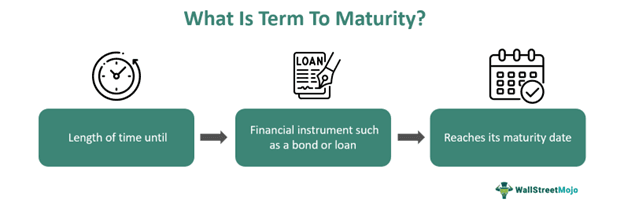
The term to maturity is a critical factor in determining the risk of a bond investment. Generally, the longer the term, the higher the risk of the bond, as there is a greater chance that economic or financial conditions could change over the more extended period, impacting the issuer’s ability to repay the bond.
Key Takeaways
- Term to maturity definition delineates the duration within which an investor or lender anticipates receiving their entire principal investment or loan amount.
- The elongation corresponds to heightened risk and uncertainty associated with the investment or loan, attributable to the increased exposure to potential changes in economic conditions or unforeseen events impacting repayment.
- Duration serves as a metric denoting a bond’s susceptibility to fluctuations in interest rates, whereas maturity denotes the point in time when a bond achieves complete repayment.
Term To Maturity Explained
The term to maturity represents the duration remaining until the debt security matures, leading to the repayment of the principal to the investor. This factor holds significance for investors assessing debt securities, as it directly influences both the security’s price and its yield. The longer the term, the more sensitive the security is to changes in interest rates. This is because longer-term securities have a greater risk of being impacted by changes in the overall economy, inflation, and other macroeconomic factors that can affect interest rates.
Bonds can be categorized based on their term to maturity into three main types: short-term, intermediate-term, and long-term bonds.
Short-term bonds typically have a term to maturity of one to three years. They are generally considered less risky than longer-term bonds because they are less sensitive to changes in interest rates and have a lower probability of default. Short-term bonds are often used as a cash management tool or as a temporary parking spot for funds.
Intermediate-term bonds have an average term to maturity of three to ten years. They offer a balance between risk and reward, and their prices are moderately sensitive to changes in interest rates. Intermediate-term bonds can provide a steady stream of income for investors seeking moderate returns over several years.
Long-term bonds last over ten years. They are generally considered the riskiest type of bond because they are susceptible to changes in interest rates and inflation. Long-term bonds can offer higher yields than short-term and intermediate-term bonds but require a longer time horizon and a higher tolerance for risk.
Examples
Let us look at the real-world and hypothetical examples to understand the concept better:
Example #1
Let’s say an investor purchases a bond with a face value of $1,000 and a term to maturity of 10 years. The bond pays a fixed interest rate of 4% per year, which means the investor will receive $40 in interest payments each year for the next ten years. At the end of the 10-year term, the investor will receive the bond’s face value of $1,000 back.
Over the next ten years, various factors could impact the bond’s price, including changes in interest rates, inflation, and the issuer’s credit rating. If interest rates rise, the bond’s price may decline as investors seek higher yields elsewhere. Conversely, if interest rates fall, the bond’s price may increase as investors bid up the price to lock in a higher yield.
At the end of the 10-year term, assuming the issuer has not defaulted on the bond, the investor will receive the bond’s face value of $1,000 back. The term of the bond in this example was ten years, which means the investor held the bond for the entire term and received all of the interest payments due.
Example #2
Consider an investor who acquires a corporate bond with a term to maturity of 15 years. This indicates that for the next 15 years, the investor will receive periodic interest payments from the issuing corporation. At the bond’s maturity date, the investor will receive the bond’s face value, representing the return on the principal investment. The term guides investors in understanding the timeline for potential returns on their investment and aids in assessing the associated risks and rewards over the bond’s lifespan.
Term To Maturity Vs. Duration
Understanding the nuances between both terms provides essential insights into evaluating investments and assessing their risk profiles.
Frequently Asked Questions (FAQs)
How long is the term to maturity of the investment?
The term to maturity of an investment depends on the type of investment and the terms of the specific investment. For example, a bond may have a term of 10 years, while a certificate of deposit may have a term of 6 months or one year.
What is the relationship between term to maturity and yield to maturity?
The term to maturity refers to the time remaining until a bond reaches its maturity date. In contrast, the yield to maturity represents the total return an investor can expect to receive if they hold the bond until maturity, factoring in its current market price, coupon payments, and principal repayment. Essentially, the yield to maturity is influenced by the bond’s term to maturity, as longer-term bonds typically offer higher yields to compensate for the increased risk and uncertainty associated with holding them over an extended period.
What is the difference between tenor and term to maturity?
Tenor refers to the duration of a financial instrument’s validity or the time remaining until it matures. At the same time, term to maturity specifically pertains to bonds and signifies the period until the principal is repaid. While both concepts denote time frames, tenor is a broader term encompassing various financial instruments, whereas term to maturity is specific to bond investments.