


What Is Dock Receipt?
A dock receipt refers to a commercial instrument that is used as evidence that an ocean carrier has accepted or received the goods at their warehouse or dock for storage or shipping purposes. The carrier or the shipping company handling the cargo issues this document.
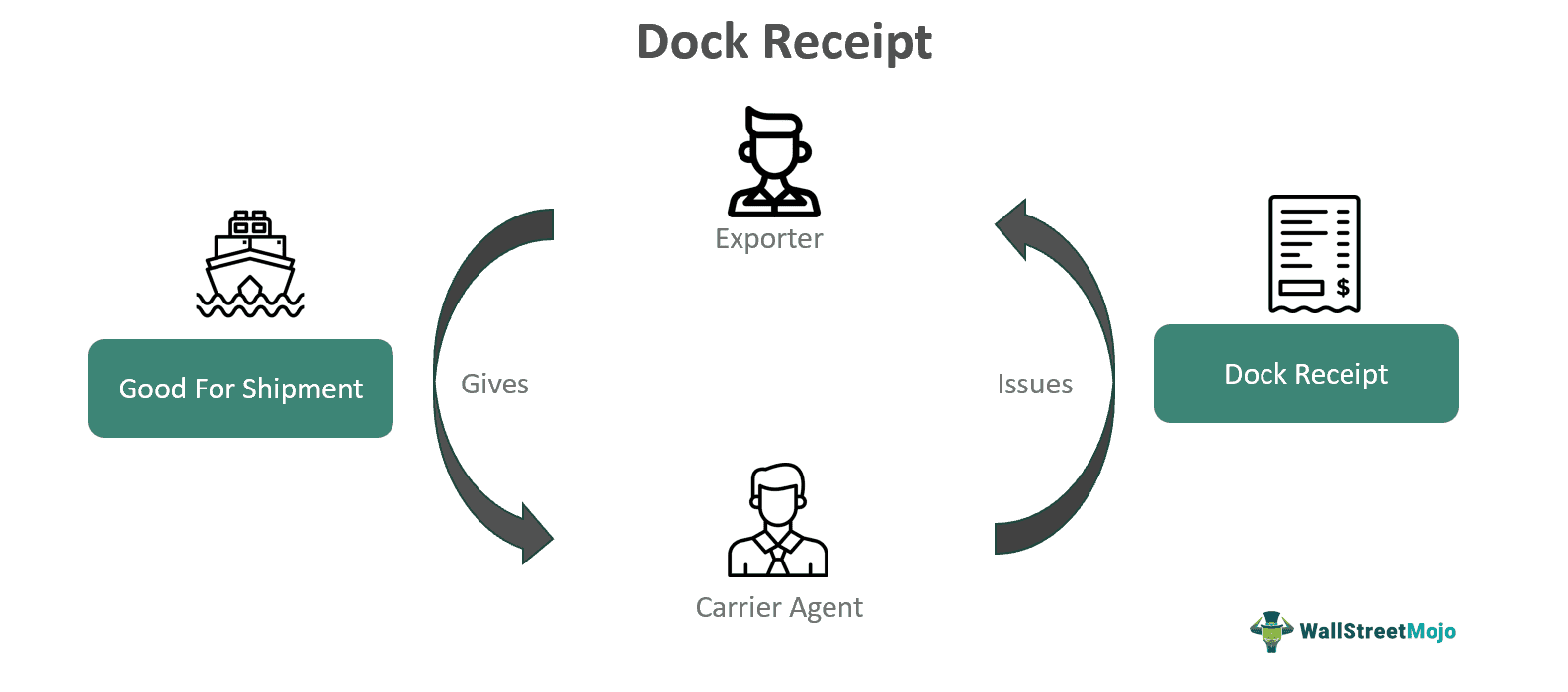
It is a critical paper in the international transportation of goods by ocean carriers. It establishes the shipping company’s responsibility to deliver the goods safely to their destinations. Further, it facilitates consigners in tracking their cargo during its shipment to the consignee. Also, this receipt is required for customs purposes and can be used for insurance claims.
Key Takeaways
- A dock receipt is a commercial instrument that is issued by an ocean carrier agent or warehouse personnel. It confirms that they have received certain goods for shipment or storage from the exporter in the process of overseas transportation.
- It consists of the details about the shipper, consignee, goods to be transported, origin and destination, and tentative dates of cargo departure and arrival.
- Unlike the bill of lading, which holds legal significance, this document has limited legal standing. However, it remains essential as evidence in dispute resolution and facilitates insurance claims for lost or damaged goods during shipment.
Dock Receipt Explained
A dock receipt is a vital document issued by the ocean carrier upon acceptance or receipt of the goods for overseas shipment or storage at the warehouse. The consigners use this document as proof of shipment or storage of goods with the respective shipping company. Hence, it transfers the accountability of goods from the consigner or the domestic carrier to the international or ocean carrier during the shipment or warehousing of such items at the port of embarkation. Moreover, these documents are non-negotiable and cannot be used to transfer the goods’ ownership to another party.
There is a brief process from issuance to surrendering of this document:
- The exporter takes the goods to the ocean carrier or warehouse, where an authorized agent or freight forwarder issues the document.
- The carrier representative or warehouse supervisor signs the document and hands it over to the shipper when the goods are loaded onto the vessel for transit.
- This document is used for internal tracking of the consignment and for raising an insurance claim by the shipper if required.
- As soon as the goods reach the destination port, the shipper needs to surrender the document to the carrier for verification of the delivered goods.
This document is issued at the time of shipment and includes critical information about the cargo, exporter, consignee, and delivery of goods. Let us discuss a dock receipt template to understand these details:
- Shipper’s Information: It mentions the name, address, company, contact number, and email address of the exporter.
- Ocean Carrier Details: These include the ocean carrier’s name, the booking number of the consignment with the carrier, the customer reference number, the issuance date, and any special instructions for the carrier.
- Consignee’s Details: This section states the consignee’s name, address, company, contact number and email address.
- Notify Party: It includes the details of the person who will act as the point of contact or notification. It can be the same as the consignee.
- Cargo Delivery Information: Such details include the delivery address and the latest delivery date.
- Inland Delivery Details: It mentions the date, time, and destination of the consignment’s inland delivery.
- Origin or Port of Loading: It states the place where the goods were received by the pre-carrier and the port where the goods were loaded.
- Port of Discharge and Delivery: The port at which the goods are to be unloaded and the delivery destination by the on-carrier.
- Vessel Details: It bears information about the vessel carrying the goods, its booking details and loading instructions meant for the cargo’s overseas carriage.
- Dates: It even mentions the cargo’s expected time and date of departure from the origin and arrival to the destination.
- Information About Loaded Goods: The document contains all the crucial details of the goods in the cargo, including the marks and numbers, number of packages, number of items or quantity in each package, description of items, their weights and dimensions, and indication of hazardous goods, if applicable.
- Special Instructions: Any other instructions or information about the handling, storage, delivery, or shipment of the goods.
- Signature and Date: The receiver of the goods carrier representative duly signs and mentions the date of receipt in this section.
Examples
The purpose of this document in the logistics chain includes ensuring smooth transportation and warehousing operations. Here are some examples:
Example #1
Suppose XYZ Ltd., a food processor exporter in California, wants to ship a consignment of 200 pieces to Mrs. Rose at ABC Corp in Paris. The employee takes the goods to the PQR Ocean Carriers, and Mr. James, the carrier representative, receives the goods at the port and issues the dock receipt after taking all the details from that employee.
After three days, the goods are loaded onto the vessel for shipment. Mr. James signed the document and handed it over to Mr. Caren, who was responsible for the shipping charge. The ship reaches Paris port after 26 days, and Mr. Caren surrenders the document to the carrier for verification of the consignment.
Example #2
Suppose a consignment shipped from Dubai to the USA gets damaged during the shipment. Since the goods were in the custody of the shipper at the time of damage, the shipper would file for an insurance claim to compensate the exporter. In this case, dock receipt plays a crucial role in confirming the items that were loaded on the vessel for shipment and their value to determine the compensation amount.
Dock Receipt Vs. Bill Of Lading
These differences distinguish the two documents and highlight their distinct roles and functions in international trade and transportation.
Frequently Asked Questions (FAQs)
Can a dock receipt be transferred to another party during the shipment process?
No, it cannot be changed or transferred to a different party while the shipment is being processed. It acts as proof of receipt and accountability between the carrier and the original shipper.
What is a dock receipt number?
It is a unique identification number provided by the shipping company, carrier, or agent to facilitate the documenting, recording, tracking, and reference of the respective goods’ receipt during the shipment journey.
What happens if a dock receipt is lost or misplaced during the shipment process?
It may be challenging to trace and maintain responsibility if this document is missing or lost during the shipment process. The shipper must immediately inform the carrier to start the process of resolution and documentation.