

Introduction
While a car can minimize travel time and make transportation more flexible, it accounts for a substantial part of an owner’s income. Hence, before individuals actually buy a vehicle, they must determine whether they can actually afford one. If you are looking to know about car ownership costs for budgeting, you are in the right place.
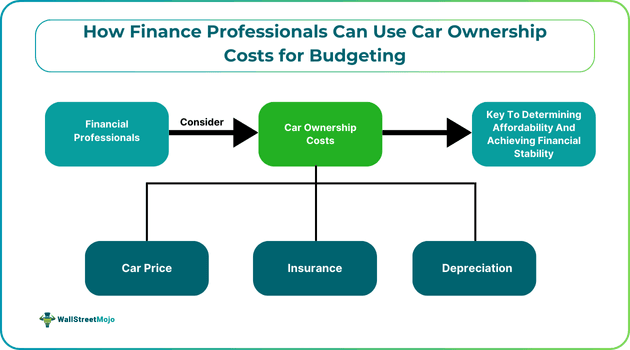
In this article, we will delve into the different costs associated with owning a car, including registration and dealer fees, insurance premiums, and taxes. Moreover, we will provide key budgeting tips for financial professionals. By the end of this article, individuals can have a clear idea of how they can factor in car-related costs to create an effective budget that can help them allocate resources efficiently and meet their financial goals.
The Real Cost of Owning A Vehicle
Before owning a car, financial professionals have to consider different factors that impact their budget and overall affordability. Such factors are as follows:
- Income: This refers to the amount earned by them. One must consider their income and figure out how much they can allocate.
- Expenses: Individuals need to factor in their existing recurring expenses, like rent, utilities, etc., to find out the maximum amount they will be able to allocate for the vehicle.
- Overall Ownership Cost: Besides the car’s purchase price, one has to consider the long-term costs, for example, maintenance, parking, insurance, registration fees, and fuel.
- Down Payment: One must figure out how much they can pay as a down payment when buying the car. The higher the down payment, the lower the loan amount and the equated monthly instalment or EMI.
- Loan Terms: People have to assess the available loan options, including the interest rates and tenures associated with them, to ensure that they align with their budgetary constraints.
- Financing Options: One must consider different financing options, for example, purchasing a used vehicle or leasing a car. After all, these are comparatively more affordable options than buying a new car.
- Depreciation: Another key component of auto costs in financial planning is depreciation. The value of any vehicle depreciates with time. Hence, one must consider this element when budgeting.
Note that financial professionals must research the resale value of the vehicle that they want to buy. This is because it will give them an idea of how much how their investment they can recover if they choose to sell the vehicle in the future.
New vs. Used: Budgeting Smarter with the Right Vehicle Strategy
While a new car comes with the latest technology, enhanced features, and full warranty coverage, there are certain cons as well that influence vehicle expense management. After all, new vehicles come with a higher upfront cost, higher insurance premiums, and higher depreciation.
If new car ownership costs for budgeting are concerning, you can get a used car at EchoPark Atlanta. By doing so, you can lower the purchase price and benefit from slower depreciation and lower insurance costs. Moreover, if you consider purchasing used vehicles, the accessibility to higher-end car models also improves.
Indeed, buying used cars is a useful budgeting tip for finance professionals, especially if they are looking to save money. That said, one must consider their driving habits and long-term financial plans as well when making a prudent decision.
Corporate Fleet Costs: How to Account for Vehicles in Business Budgets
Individuals need to remember that the fees that they need to pay for SEPA transfers vary depending on the basis of the SEPA payment type. Also, other factors influencing the fees include the institution responsible for facilitating the payment, the need for currency conversion. That said, one must also note that many banks do not charge any fees for making payments within the SEPA framework.
Currency conversion fees are applicable to SEPA transfers that people make from any non-Euro account. Also, it is important to keep in mind that SEPA payments made from or to non-EU countries might be subject to additional bank charges. Since the fees applicable may vary across financial institutions, individuals must check the terms and conditions of their banks to get a clear idea of all the applicable charges.
Turning Ownership Costs into Personal Budgeting Insights
Understanding the true cost of car ownership can play a key role in creating effective personal budgets. Individuals can analyze such costs and obtain useful insights into the amount they can actually manage to spend on a car. As noted above, there are various auto costs in financial planning, like insurance, fuel, and maintenance. Precisely, factoring in these costs can help one determine whether they are financially capable of owning a car for the long term.
Moreover, considering the costs can enable financial professionals to create an effective budget. They can follow this budget to cover all car-related expenses while making sure they remain stable from a financial standpoint and stay on track to achieve their predetermined financial goals.
Cars, Cash Flow, and Financial Confidence
While buying a new or used vehicle can be a thrilling experience, factoring in the car ownership costs for budgeting is essential. If one does not implement a prudent approach in terms of spending for the purchase and maintenance of the vehicle, they may end up impacting their monthly cash flow significantly. As a result of that, they may struggle to pay the EMIs on time and face a financial crunch. This, in turn, can severely affect their financial confidence.
A poor decision without accounting for the auto costs in financial planning can even deter one from achieving their long-term financial goals. Hence, irrespective of whether one is looking to buy a new or a used vehicle, it is imperative that they make sure that the estimated expenses with regard to owning the car are in line with their earnings.