


What Is Settlement Statement?
Settlement statement refers to a summarized document that is prepared between the parties (lender and vendor) to close the loan or property transaction. The sole purpose of this statement is to list down any costs or fees outstanding to the buyer or seller.
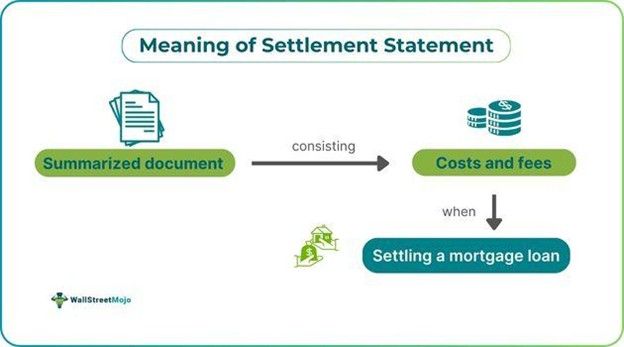
This closing settlement statement is a very popular and common document for housing and loan products. It is provided to both parties (buyer and seller) to avoid last-minute haste when closing the transaction. Furthermore, this summary also includes any fees due from the borrower’s side apart from the interest payable. Most often, they are preferably called closing statements in real estate agreements.
Key Takeaways
- Settlement statement is a real estate document issued to both buyer and seller when settling a mortgage loan agreement.
- It states the details of all outstanding dues and charges pertaining to the loan taken.
- Some of the common elements under the statement include appraisal fees, title administration costs, background checking fees, underwriting fees, accrued interest, and more.
- The two main types of documents in this statement are closing disclosures and the HUD 1 statement.
- Closing disclosures mostly detail the key aspects of a loan. HUD 1 statement focuses on the terms and conditions applicable to reverse mortgages.
How Does Settlement Statement Work?
A settlement statement is a document detailing all the costs and charges the lender and vendor (buyer and seller) may face when settling the transaction. It also includes terms and conditions owed by the borrower or lender during the loan. However, they may also be used for large business transactions, insurance policies, and any market trades. The ultimate use of this document is to present a summary of all the dues and obligations the parties will face when closing the transaction. For example, if a person wants to settle a loan taken previously, the final settlement statement should detail any outstanding interest or any penalty charged, if applicable.
An entire process is involved before preparing this statement. It starts with reviewing and verifying the loan or mortgage taken. Both buyer and seller will get a final settlement statement to review all the terms and conditions to measure its accuracy. Any adjustments, if they exist, are calculated and included in the statement. Later, both parties sign the document (closing document) and transfer funds for the included costs.
Under the closing settlement statement, multiple components are acting as fees for real estate transactions. These costs mostly appear in mortgage loan products. It includes the following:
- Appraisal fees
- Title administration costs
- Background checking fees
- Origination fees
- Loan insurance charges
- Home inspection costs
- Interest
- Underwriting fees
- Owners corporation charges, and more.
However, when working with mortgage lending agreements, settlement can occur in two ways: closing disclosures and HUD 1 settlement statements. While mortgage disclosures are standard documents prepared for traditional mortgages, this statement is used in reverse mortgages and mortgage finance transactions.
Examples
Let us look at some examples of how mortgage lenders use real estate settlement statements in their lending facility:
Example #1
Suppose John took a loan (mortgage) for the Texas property he purchased two years ago. At that time, the loan amount was $15,00,000, which carried an interest rate of 7% until paid off. Now, after two years, John felt the need to repay and finish his entire debt to avoid any future liabilities. With the amount secured through the last successful project, John decided to settle this loan as early as possible.
Thus, a collaborative meeting with Kevin (mortgage lender) and a settlement statement were prepared for this purpose. This agreement included various items such as:
Amount paid by John
- Purchase price – $200,000
- Down payment – $19,000
- Closing costs (including loan origination, escrow, and title search fee) – $10,000
Total = $2,29,000
Amount paid to John (loan)
- Loan amount – $250,000
- Seller credits (paid by the lender on behalf of the buyer) – $34,000
- Earnest money deposit: $10,000
Total = $294,000
Net amount due = $2,94,000 – $229,000
= $65,000
At the closing of the transaction, John is responsible for paying $65,000 on settlement.
Example #2
According to news published on September 2023, the Consumer Financial Protection Bureau (CFPB) made various waves to improve mortgage settlement services with new provisions. In the same month, the CFPB posted a two-page document for the HUD 1 settlement statement. This guidance insisted on various rules like HUD-issued official rules, interpretations, or policy statements. Furthermore, pre-purchase counseling and homebuyer education programs may be paid for by mortgage originators or lenders.
Settlement Statement Vs. Closing Disclosure
Let us understand the differences between these two concepts:
Frequently Asked Questions (FAQs)
Where to find my HUD settlement statement?
If the loan has not yet closed, borrowers can ask the lenders to provide it. However, if the lender has done the needful and is still invisible to the borrower, it is better to check the closing documents once. The lender may provide them one business day before the loan closes, as per the law.
How to read a settlement statement?
There are four sections to this closing statement, including:
- Section #1 – Name of the buyer and seller
- Section #2 – Title company name, escrow number, officer, and other information
- Section #3 – Property address, buyer, seller, lender, settlement date, disbursement date, etc.
- Section #4 – Debit and credit columns with a description of items (or costs) payable.
Who should review the settlement statement before closing?
Borrowers (or buyers) must usually review the closing documents before settling the mortgage agreement. It is better to check all the amounts and charges to avoid any unnecessary additions.
Where can one get a copy of the settlement statement?
Real estate agents, lenders, or lawyers are the sources for regaining the copy of the closing statement. In some cases, even a closing agent can provide it.