


Search Cost Meaning
Search cost refers to the accumulated amount of time, effort, energy, and money that goes into the whole process of buyer and seller identifying, meeting, and making a transaction in a market structure.
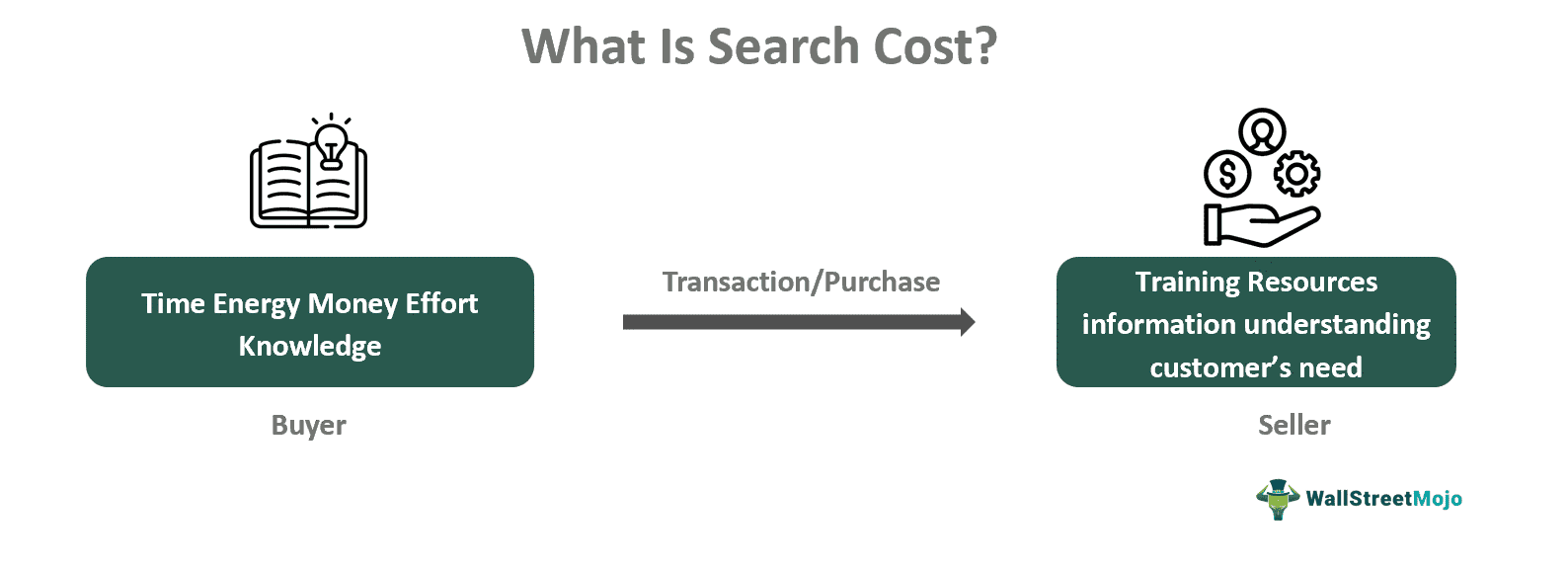
The lower this cost is, the more quickly a product’s information is available to a customer. People make decisions and opt for different products before making the final purchase. It also depicts the rational behavior of customers in the market. This cost varies from product to product and applies to both seller and buyer.
Key Takeaways
- Requotes are popular in forex and equity trading, where traders receive a new price quote against the original one. They can either accept or reject the proposal; otherwise, cancel the trade.
- There are different causes for this trade, including volatility, liquidity problems, slippage, and technical glitches.
- It is an attempt to inform traders about the current market price and further confirmation. This quoting is always a treat for the broking platforms.
- Likewise, traders can use various methods to avoid this situation by reconsidering their broker or trading platform, monitoring market volatility, and using limit order and stop loss.
Search Cost Explained
Search cost is the total amount of work done by a buyer or seller in a market, from identifying each other, sharing information, and, lastly, making the final purchase. When a customer wants a product, the whole process starts with the person trying to find it, comparing it, and then buying it from the market. Now, this process depends on the type of product and its expenditure, defining its availability, service, information, benefits, etc. Both buyer and seller work on all these aspects.
The search cost definition economics elaborates on the barriers a customer faces when searching for a specific product in a marketplace. It includes a need for more resources, knowledge, information, education, and training. This cost applies to both seller and buyer, and economists study to understand these barriers and make efforts to reduce them and understand customers’ buying behavior.
Buyers always risk incurring search costs and not finding the product they are looking for. Still, it is always arguable that a searcher can spend or invest their money, time, and energy to the extent that the marginal cost of continuing the search is equal to the expected benefit from a successful search result. The lower this cost, the higher the chances of a transaction. It also showcases that these costs are incurred before the actual transaction may or may not take place.
Types
The types of search costs are as follows:
#1 – Internal
These are the costs incurred by a person looking for a product or service on the market. Apart from the monetary aspect, the amount of money, effort, and energy they are ready to invest in search, along with their knowledge, information, resources, and mental conscience. Economists study internal costs to understand and reduce a customer’s effort to seek out the product.
#2 – External
These costs are not in a customer’s control but in its decision and willingness to pay for a particular product. Once a customer has rationally compared the product based on their needs and requirements, it is the final call of purchase whether they want to buy the product or not, ultimately incurring the cost.
Examples
Example #1
Consider Dylan, who visits her aunt’s home on vacation, where he finds a beautiful carpet. He inquires about it, and his aunt tells him that a friend gifted them the carpet; Dylan is very interested in buying the same carpet for his house. He clicks a picture of the carpet and comes back to his house. He tries to find the carpet online, but it is not available. Time passes, and Dylan reads a few blogs, watches videos to find them, and searches the local market, but has yet to be successful. Finally, Dylan asks his aunt to share her friend’s number.
Dylan contacts his aunt’s friend and explains the situation; the other person agrees to help and tells him that he found the carpet in a small village on the outskirts of the city, and Dylan had to visit the village personally to buy it. Dylan makes the whole journey, finds the carpet, buys it, and is finally joyous. In this hypothetical scenario, the search cost is all the effort, energy, time, and money Dylan invested to buy the carpet. Since no information was available and no particular effort was made by the seller’s end, Dylan’s search cost was higher.
Example #2
The second example comes from a 2021 article. Guosto, which is a British meal kit retailer, stepped into brand building and TV advertising but soon realized that it needed to switch to a broader brand approach and launched its first brand platform. The business continued to grow during the pandemic. 80% of signups came through performance marketing.
However, new research found that an econometric analysis of ten online businesses used televisions to drive their growth. One fourth of the clicks were paid generic searches, which had the highest search cost, and the remaining twenty percent were paid brand searches. Direct/URL or organic search visits accounted for 66% of all visits, with no additional costs.
Frequently Asked Questions (FAQs)
What is the significance of search cost?
The significance of the search cost is that it is a transaction cost that applies to both the seller and buyer and is inversely proportional to each other. The more a seller will incur such costs to identify the buyer and offer accessibility, the less the consumer will incur such costs, and vice versa.
What is the difference between search cost and bargain cost?
Search cost comprises the monetary and nonmonetary expenses a buyer or seller incurs to make a transaction. In contrast, a bargain cost is a price the consumer has negotiated, and the buyer is ready to accept it as a final price. A seller is not interested in the bargain cost but is involved in the search cost.
What is the relative search cost?
The relative search cost is the price comparison between two alternative products based on their information and expenditures. Suppose a customer has the required knowledge for a particular product because of its significant expenditure and other factors. In that case, this cost will be lower than those of which the customer has no or minimum knowledge.